Quick Answer: A burst fade is a fade that curves around the ear in a semicircle — like a sunburst — and drops down behind the ear toward the neckline, while the back keeps more length than in a regular fade. It is the base of the burst fade mullet, works with almost any top, stays sharp for two weeks, and typically costs €15–35 in Germany.
A few years ago, hardly anyone in a German barbershop asked for it by name. Now the burst fade is one of the most requested cuts in Berlin, Hamburg and Cologne — pushed by footballers, TikTok barbers and the return of the modern mullet. This guide covers what a burst fade is, the guard numbers behind it, the styles worth asking for, the words to say in the chair, and what it costs in Germany.
A burst fade is a fade haircut where the blend is shaped into a curved arc around the ear instead of running in a straight band up the side. The fade "bursts" outward from the ear in a semicircle: shortest around the ear, then widening and softening as it moves up and back before dropping behind the ear to the neckline.
That curved shape is the whole point. Because the fade follows the ear and sweeps backward, the hair at the back keeps more length than in a mid or high fade, where the back is faded out with the sides — exactly why the burst fade pairs so well with longer tops and mullets.
A burst fade is not a temple fade. A temple fade (or temp fade) only sharpens the area at the front temples, next to the hairline; the burst fade covers the whole side panel around the ear — a much bigger, more visible shape. And like other fades, it comes in heights: a low burst fade keeps the arc small and tight around the ear, while a high burst fade pushes the arc up and out for a bolder curve.
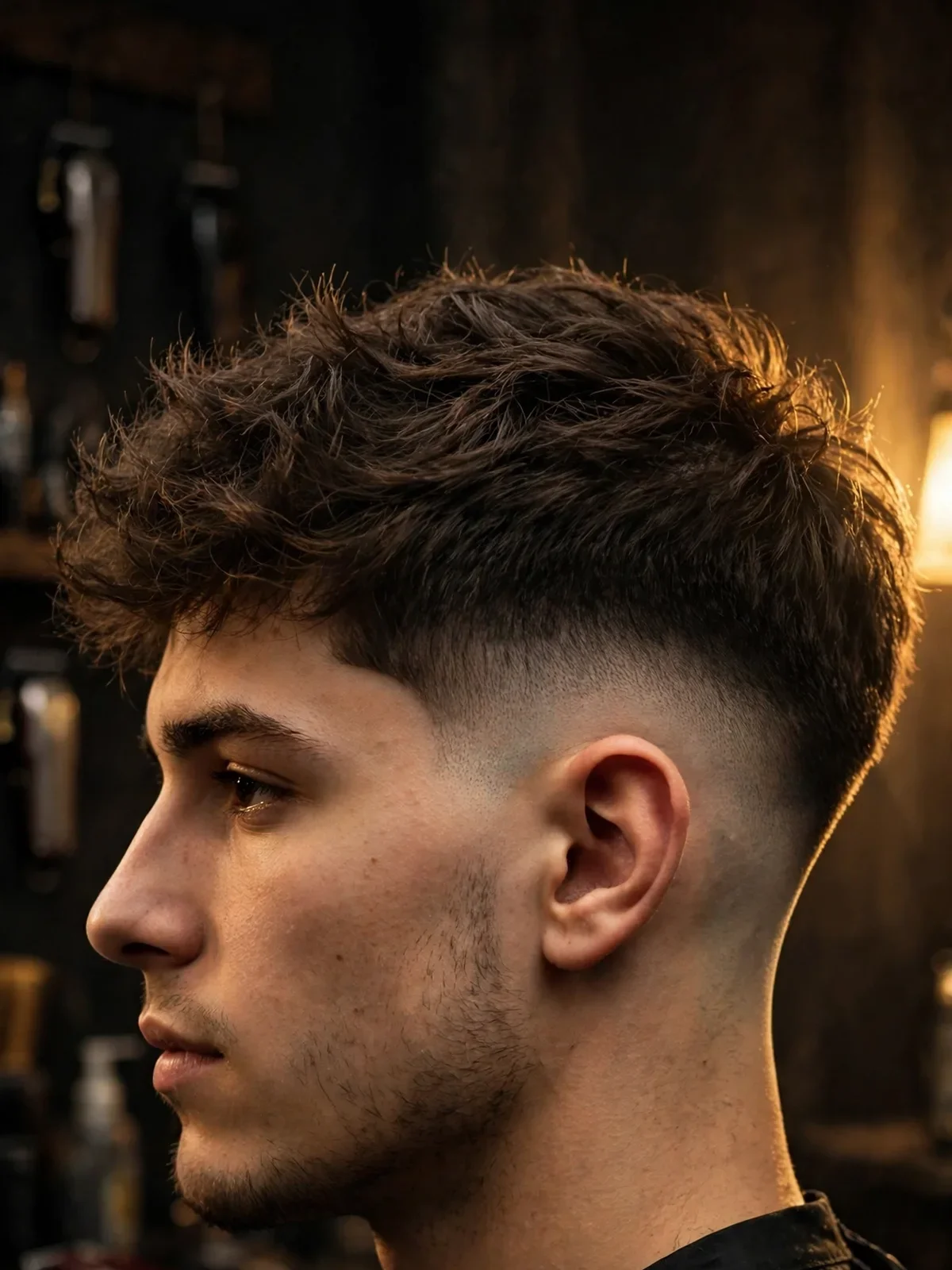
The three cuts differ in one thing: where the fade sits — and that changes the whole silhouette.
| Cut | Where the fade sits | Back of the head | Overall feel | Best for |
|---|---|---|---|---|
| Burst fade | Curved arc around the ear, dropping behind it | Keeps length at the back | Modern, rounded, a statement | Mullets, curly hair, textured tops |
| Taper fade | Only the edges — sideburns and neckline | Keeps almost all length | Subtle, classic, natural | First fade, conservative workplaces |
| Mid fade | Straight band halfway up the sides | Faded out like the sides | Balanced, clean, sharp | Most men; office-safe styles |
There is also a hybrid worth knowing: the burst fade taper. It keeps the burst around the ear but blends the neckline into a soft taper instead of letting the fade drop to a point behind the ear — a good middle option if you like the curve but want a quieter finish. If you are torn between the burst and the straighter cuts, look at the mid taper fade guide with styles and photos first — seeing the mid-height blend on real heads makes the difference much easier to judge.
And if the straight band is more your style, the Mid Fade guide for Germany covers that cut with the same detail — styles, guard numbers and prices.
A burst fade is built with the same clipper guards as any other fade — the difference is the shape of the area they cover. Instead of a straight band, they work inside a curve: the shortest guard sits closest to the ear, each longer guard one step further out.
| Guard | Length | Where it is used in a burst fade |
|---|---|---|
| 0.5 | ~1.5 mm | Inside the arc, closest to the ear — the shortest point (or skin, for a skin burst fade) |
| 1 | 3 mm | The inner body of the burst, around the ear |
| 2 | 6 mm | The middle of the arc, where the burst starts to widen |
| 3 | ~10 mm | The outer edge of the burst, blending into the longer hair above and behind |
You do not need to memorise the numbers, but they let you fine-tune the cut: "a wider burst" means the barber carries the 2 and 3 further out, while "a tighter burst" keeps the whole arc closer to the ear. To see what each length looks like, the clipper guard numbers guide walks through every guard with photos.
Say this, in English or German — barbers in Germany hear both all day:
"A burst fade around the ears, starting with a 0.5 inside the arc and blended out to a 3. Keep the back longer — don't fade it out — and leave the top at about six centimetres, scissor-cut with texture."
Or in German, word for word: "Einen Burst Fade um die Ohren — innen mit 0,5 anfangen und nach außen bis zur 3 ausblenden. Hinten bitte länger lassen und nicht ausfaden. Oben ungefähr sechs Zentimeter, mit der Schere schneiden und etwas Textur rein."
Three phrases worth knowing in the chair:
The key sentence is the one about the back: say just "burst fade" to a barber who mostly cuts classic fades, and he may fade the back out of habit — then it is no longer a burst. Show a photo as well — the arc is hard to describe and easy to point at. Save two or three examples on your phone, ideally of men with your hair type.
A proper burst fade is built like this — knowing the steps helps you judge a barber:
The burst is a base — the top and back decide the character. Four pairings cover most of what is being cut:
The pairing that made the cut famous. The back is left long — anywhere from a subtle flow to a full modern mullet — while the burst carves a clean arc around the ears so the length looks deliberate, not grown out. A statement, but a controlled one — the tidy sides make it office-safe too. Best on straight and wavy hair.
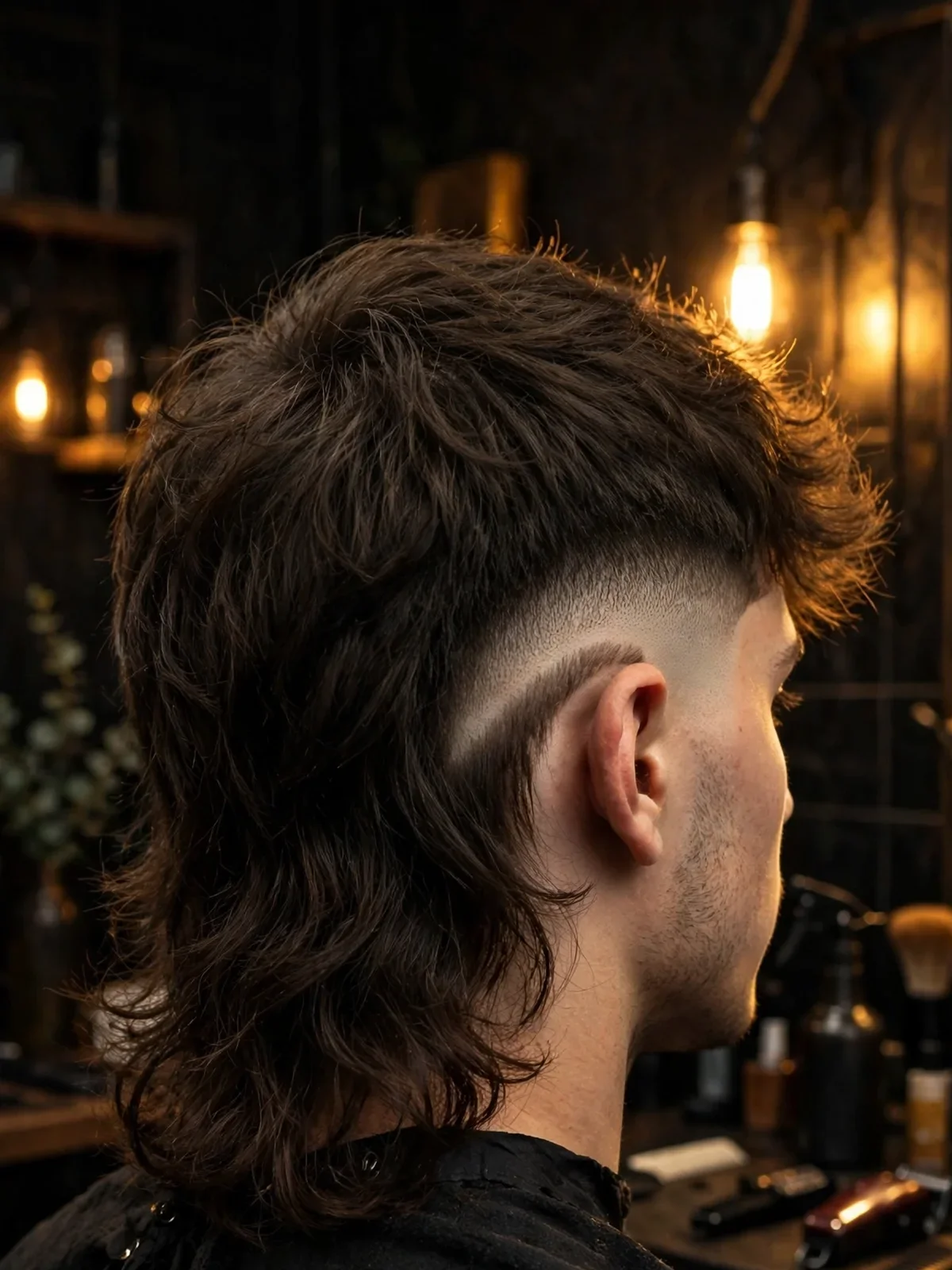
The quiet version. The arc sits lower and tighter around the ear, and the blend does not climb as high. If you like the idea of a burst but your workplace is conservative — or it is your first burst fade — start with this one; you can always widen the arc next visit.
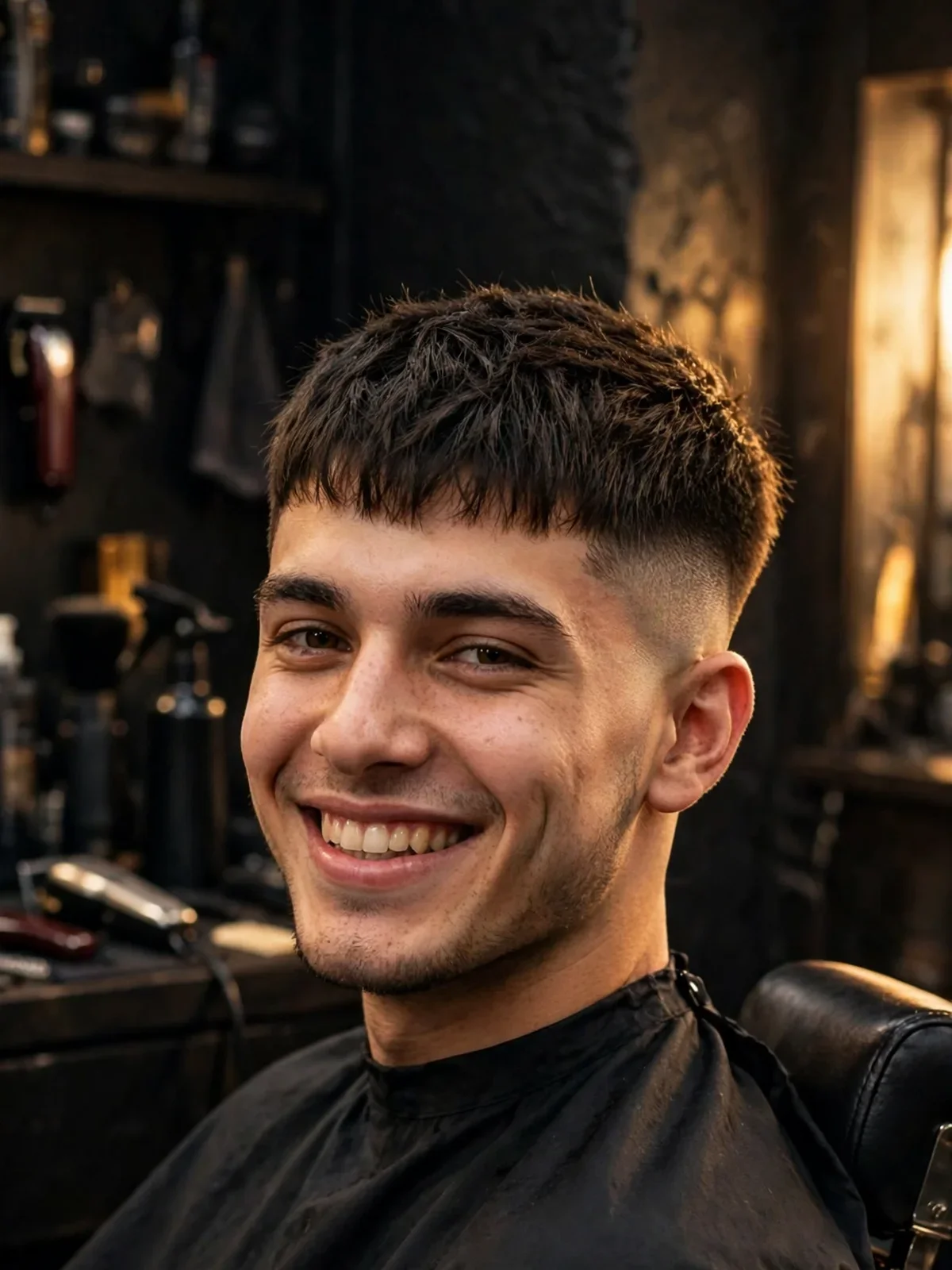
Curly hair grows outward into a round shape, and the burst fade is the standard fix: the arc removes the bulk around the ears while the top and back keep their curl. Ask the barber to shape the top dry — curls shrink as they dry, so a wet cut ends up shorter than planned. A curl cream keeps the top defined without stiffness.
A textured crop or fringe worn forward is the low-effort partner for a burst fade. The top stays choppy on purpose, the clean arc underneath provides the contrast, and styling takes a fingertip of matte paste. It suits straight and wavy hair, covers a high forehead well, and is the easiest burst fade style to maintain.
Receding hairline? A burst fade can work well, because the eye follows the arc around the ear instead of the temples — pair it with a fringe or textured top worn slightly forward.
Prices vary by city and shop, but as a typical guide for 2026: most men pay €15–25 for a burst fade in a standard barbershop, and up to €35 in premium shops in Munich, Hamburg or central Berlin. A beard trim usually adds €5–10, and a wash-and-finish package a few euros more. A careful burst takes 30–45 minutes, because the arc must be built and mirrored on both sides.
A burst fade looks its sharpest for the first 10–14 days. The inside of the arc grows out fastest: once the shortest hair around the ear reaches a few millimetres, the curve softens and the shape looks like a plain grow-out. Most men rebook every two to three weeks; a skin burst or fast-growing hair sits closer to two.
The grow-out is more forgiving than a skin fade's, because the back keeps its length — the cut relaxes instead of falling apart. At home: wash as normal, towel-dry, and work a pea-sized amount of matte paste or clay through the top. Once a week, tidy the neckline below the drop with a razor or trimmer. Do not try to re-cut the arc yourself — one wrong pass is harder to fix than a soft grow-out.
What is a burst fade? — A burst fade is a fade shaped into a curved arc around the ear, like a sunburst. The hair is shortest inside the arc, blends outward through longer guards, and drops down behind the ear toward the neckline — while the back keeps more length than in a regular fade.
Is a burst fade the same as a taper fade? — No. A taper fade only cleans up the edges at the sideburns and neckline and keeps the sides long, while a burst fade removes a whole curved panel around the ear. The burst fade taper is the hybrid: a burst around the ear finishing in a soft taper at the neckline.
What guard numbers are used for a burst fade? — Usually a 0.5 (or skin) inside the arc, blending out through a 1 and 2 to a 3 at the outer edge. The numbers are the same as in other fades — what changes is the curved shape they cover.
Does a burst fade suit a round face? — Yes, with the right settings. Keep the burst low and tight so the arc does not add width at ear level, and keep some height or texture on top to lengthen the face. A wide, high burst with a flat top is the combination to avoid.
How often should you get a burst fade trimmed? — Every two to three weeks — the hair inside the arc grows out fastest, and once the curve softens, the cut loses its shape. Skin versions and fast-growing hair need the two-week rhythm.
Can you do a burst fade at home? — It is one of the hardest fades to cut on yourself. The arc sits around and behind the ear — where you cannot see without two mirrors — and both sides have to match. Maintaining the neckline at home is fine; leave the burst itself to a barber.
Does a burst fade work with curly hair? — Very well — it is one of the most popular curly cuts. The arc removes the bulk that makes curls look round, while the top and back keep their natural curl. Ask for the top to be shaped dry, as curls shrink as they dry.
How long does a burst fade take to grow out? — The sharp shape lasts about two weeks. After three to four weeks the fade has softened into a general short back and sides, and growing back to one even length typically takes two to three months.
How much does a burst fade cost in Germany? — Typically €15–25 in a standard barbershop and up to €35 in premium city shops. A beard trim usually adds €5–10.
What is the difference between a burst fade and a temple fade? — A temple fade only sharpens the small area at the front temples, beside the hairline. A burst fade covers the whole side around the ear and drops behind it to the neckline — a far bigger, more visible shape.
Burst fade or mid fade — which should I choose? — Choose the burst fade if you want a modern, rounded shape, plan to keep length at the back, or are thinking about a mullet. Choose the mid fade for a straighter, cleaner, more office-safe line. The 61 mid taper fade styles with tips and photos show the mid-height family in detail if you want to compare before deciding.